
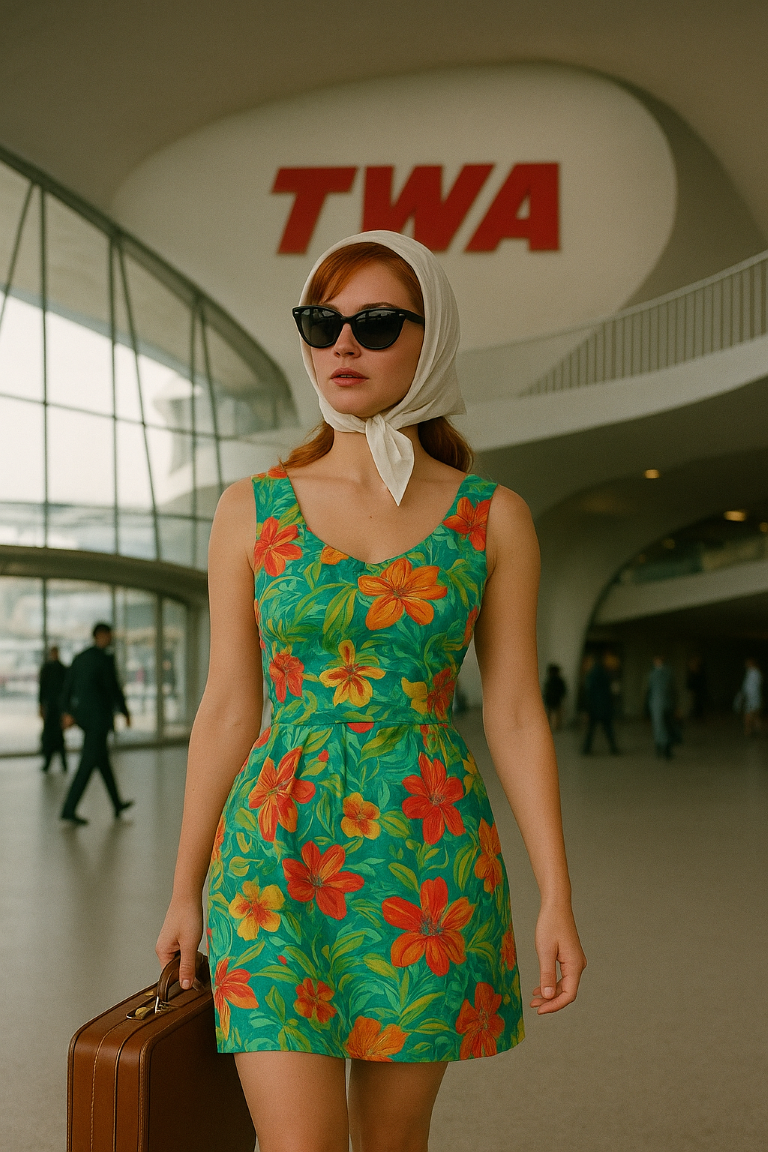
…To the accompaniment of space age lounge music by Esquivel, Young Lidiya, dressed like a 1960s film star—headscarf tied under the chin, dark sunglasses, stylish spring dress and heels—walked briskly through a busy airport terminal with a suitcase in hand…
Behind the Scenes
Her Magic Mushroom Memoir is a work of historical fiction inspired by the true origins of the modern psychedelic movement, told through the intimate collaboration between an aging woman and a contemporary writer at a crossroads. As Lidiya Hart Johnson revisits a life shaped by love, loss, and a little-known chapter of twentieth-century scientific and cultural history, her story draws Christopher Wade into a reckoning with his own failures and unrealized futures. Blending history and imagination, the novel explores how chance encounters reverberate across generations—and how telling a story can transform both the teller and the listener.
Her Magic Mushroom Memoir was inspired by the lifelong quest of R. Gordon Wasson and his beloved wife, Dr. Valentina Pavlovna Wasson, to uncover truths about entheogens. We are indebted to Masha Wasson Britten, the Harvard Herbaria and many other sources that highlights the breadth of the Wassons’ interests, observations, and social/professional connections.
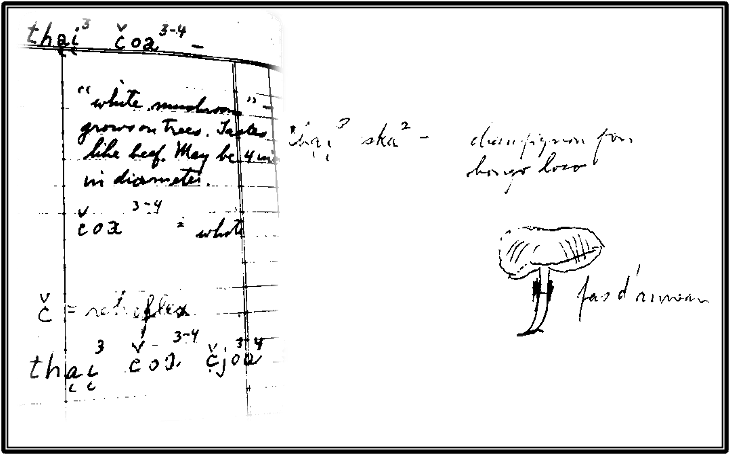
The photo demonstrates Gordon Wasson’s attempts to learn Mazatec.
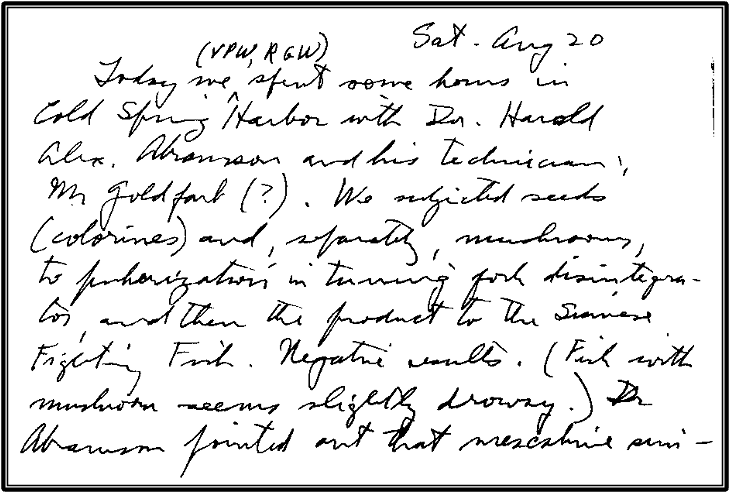
And here he describes testing the content of the mushrooms using Dr. Harold Abramson’s Siamese fighting fish assay for psychoactive substances. That contact is noteworthy since Abramson was a major participant in the CIA’s MK ULTRA mind-control program.
Field Notes
Field notes provide an extensive and invaluable foundation of information about the time spent finding and interpreting the scientific and anthropological meaning of the "Magic Mushrooms". Local anthropologists often accompanied them during their journeys into mountainous Oaxaca. A desire to be accurate and culturally sensitive is illustrated in this field note in which R. Gordon Wasson, already conversant in Spanish and several other languages, sought to understand and speak the Mazatec language.
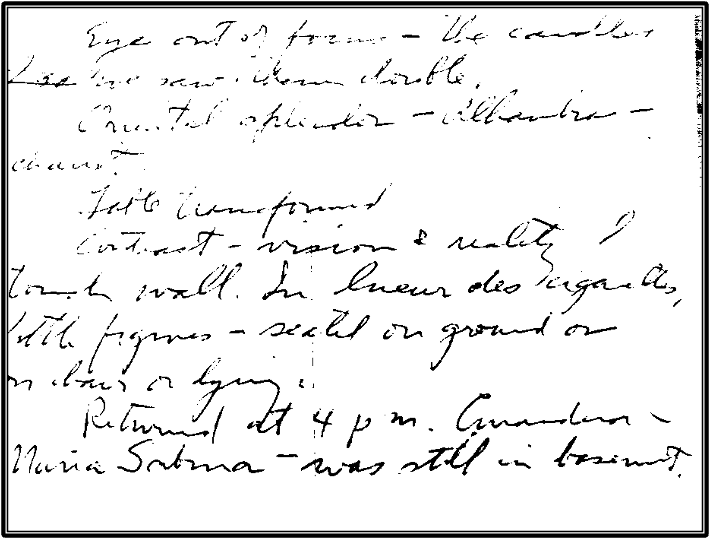
Here he records observations while participating in Maria Sabina’s mushroom ceremony.
Subsequent Histories and Investigative Reports
Psychedelic Opportunists
Much has been written about the Psychedelic Opportunists (those who were drawn to the utility of psychedelics for mind control experiments or other self-serving purposes). Her Magic Mushroom Memoir takes account of Allen Dulles, Sidney Gottlieb, James Moore, Harold Abramson, Ewen Cameron, George Hunter White, Charles Geschickter, Richard Helms, Timothy Leary. Noteworthy recent books about the dangerous deceits of the opportunists are:
Poisoner In Chief (Henry Holt and Company, 2019) Stephen Kinzer.
Tripping on Utopia (Grand Central Publishing, 2024) Benjamin Breen
Entheogen Adherents
Entheogen Adherents (those whose work was focused on the historical, cultural, spiritual, and/or therapeutic attributes of entheogens) included in Her Magic Mushroom Memoir are: R. Gordon Wasson, Valentina Pavlovna Wasson, Masha Wasson, Maria Sabina, Richard Schultes, Albert Hofmann, Roger Heim, Carl A.P. Ruck, Aldous Huxley
Relevant recent books about the Adherents include:
Mycelium Wassonii (Anthology Editions, 2021) Brian Blomerth
Immortality Key (St. Martin’s Press, 2020) Brian Muraresku
How To Change Your Mind (Allan Lane, 2018) Michael Pollan
Mycelium Running: How Mushrooms Can Help Save the World (Ten Speed Press 2005) Paul Stamets who was also the 2015 recipient of the inaugural Gordon and Tina Wasson Award from the Mycological Society of America
Miscellaneous Sources
Photographs
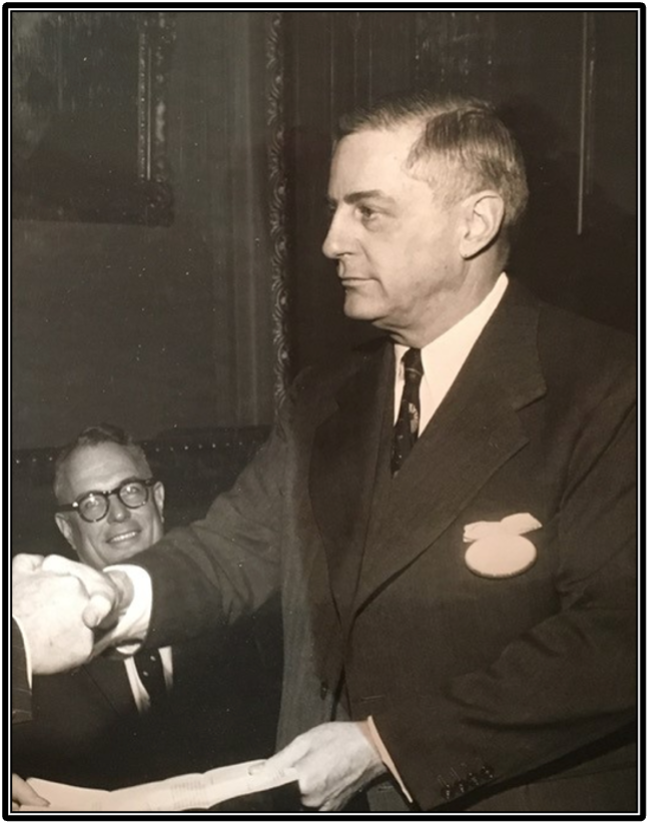
The photograph above shows G. Keith Funston, President of the New York Stock Exchange (NYSE), looking on as Gordon Wasson receives an award.
At the time of these discoveries, the Wassons were also actively contributing to the post-war business and political power of the United States. During that period, Gordon Wasson’s J.P. Morgan Bank merged with Guarantee Trust to serve almost all of America’s top 100 companies.
Organizational Records
For example, R. Gordon Wasson invited into the Century Association the well-known diplomats George Kennan - the advocate for containment of Soviet expansion during the Cold War - and Ellsworth Bunker - Ambassador to Vietnam during the Vietnam war. As a member of the Council on Foreign Relations Gordon Wasson had contacts far beyond the banking community.
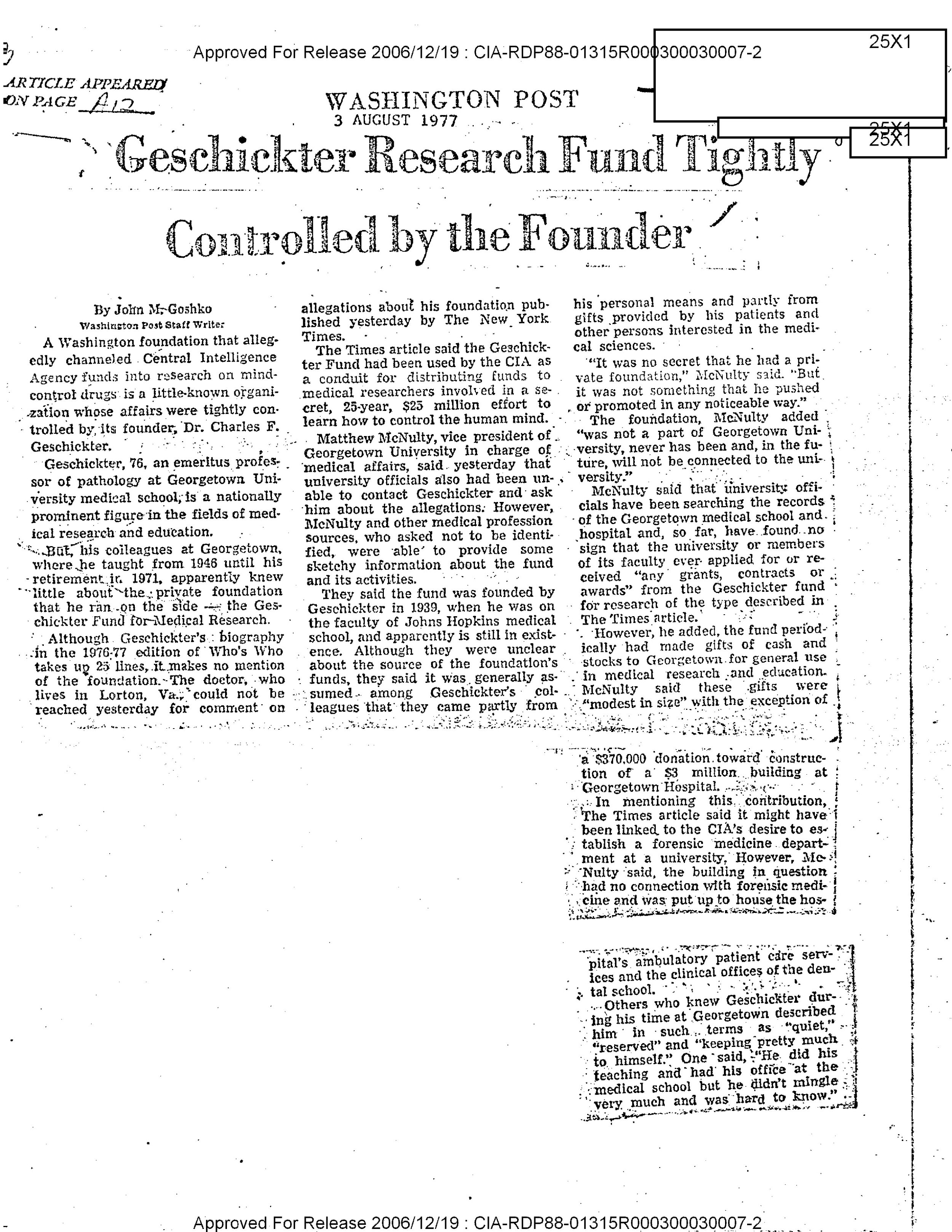
Although CIA archives suggest that the Wassons were unwitting participants in its Opportunistic schemes, the CIA’s Geschickter Fund was cited for its support of Gordon Wasson’s 1957 article Seeking the Magic Mushroom, published in Life Magazine. This places Gordon Wasson in company with numerous colleges and universities, free-lance contractors, and both U.S. and foreign government personnel who received Geschickter Funds.
Mexican Media
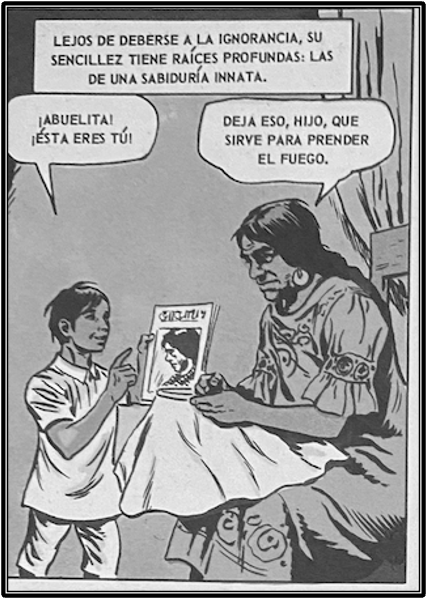
The unintended cross-cultural consequences of the Wassons’ Magic Mushroom publicity were suffered by the Mazatec in Huautla. Although Maria Sabina became a cultural icon in Mexico and beyond, locally she was an outcast blamed for the hippie invasion. Maria Sabina Y Los Hongos Alucinantes; Libro Comic, Organizacion Editorial Novaro, SA Mexico DF 1975. An illustration makes that point clear.
Translated: “Grandmother. Is that you?”
“Put that down, son, it's used to light the fire.”
Her Mushroom Ecstasy
As her husband recounted in his last book, Persephone Quest, Late in August 1927, my bride, as she then was, and I took our delayed honeymoon in the chalet lent to us by the publisher Adam Dingwall at Big Indian in the Catskills. She was a Russian born in Moscow of a family of the intelligentsia. Tina had fled from Russia with her family in the summer of 1918, she being then 17 years-old. She qualified as a physician at the University of London and had been working hard to establish her pediatric practice in New York. I was a newspaper man in the financial department of the Herald Tribune.
On that first beautiful afternoon of our holiday in the Catskills, we went sauntering down the path for a walk, hand in hand, happy as larks, both of us abounding in the joy of life. There was a clearing on the right, a mountain forest on our left.
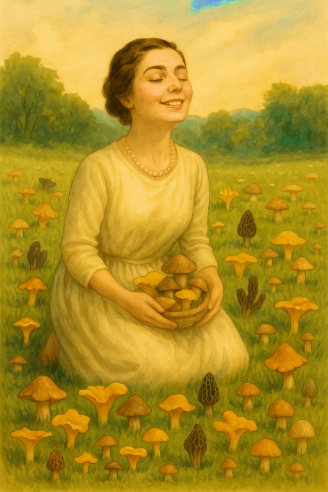
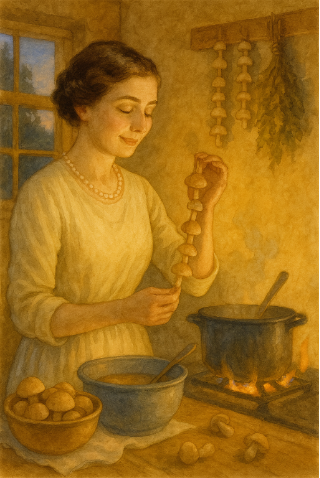
Suddenly Tina threw down my hand and darted up into the forest. She had seen mushrooms, a host of mushrooms, mushrooms of many kinds that peopled the forest floor. She cried out in delight at their beauty. She addressed each kind with an affectionate Russian name. Such a display she had not seen since she left her family’s Dacha near Moscow, almost a decade before.
She knelt before those toadstools in poses of adoration like the Virgin hearkening to the Angel of the Annunciation. She began gathering some of the fungi in her apron. I called to her: “Come back, come back to me! They are poisonous, putrid. They are toadstools. Come back to me!” She only laughed the more: her merry laughter will ring forever in my ears.
That evening she seasoned the soup with the fungi, she garnished the meat with other fungi. Yet others she threaded together and strung up to dry, for winter use as she said. My discomfiture was complete. That night I ate nothing with mushrooms in it. Frantic and deeply hurt, I was led to wild ideas: I told her that I would wake up a widower.
She proved right and I wrong.
The particular circumstances of this episode seem to have shaped the course of our lives. We began checking with our compatriots, she with Russians and I with Anglo-Saxons. We quickly found that our individual attitudes characterized our respective peoples. Then we began gathering information, at first slowly, haphazardly, intermittently.
We assembled our respective vocabularies for mushrooms: the Russian was endless, never to this day exhausted; the English, essentially confined to three words, two of them ill-defined—toadstool, mushroom, fungus. (Yale University Press, 1986. Copyright R. Gordon Wasson)
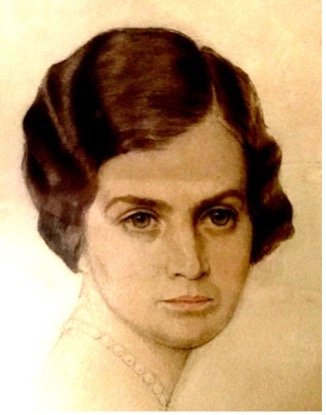
Valentina Pavlovna Wasson
Valentina Pavlovna Wasson and her husband became ethnomycologists by happenstance (long before they coined the word).
Initially inspired by a walk in the woods they took while honeymooning in the Catskills in late August 1927, Valentina and Gordon became fascinated by the historical and sociological impacts of naturally occurring, mind-altering mushrooms in different cultures throughout the ages—a new field of research that they called ethnomycology. As a practicing physician (rare for a woman at that time), Valentina was especially interested in the therapeutic potential of psychoactive chemicals, not merely their cultural and historical significance.
Sadly, soon after presciently espousing the use of these psychoactive chemicals for the treatment of addictions and for the care and management of the dying, she herself died at the age of fifty-seven from a painful, disfiguring, self-diagnosed mouth cancer. She had just barely lived to see the publication of her epic, two-volume exploration of Mushrooms, Russia and History, which she co-authored with her husband. (It should also be noted that her bestselling book about adoption, The Chosen Baby, has had seventeen editions since it was first published in 1939).
Valentina’s work with her husband on a mushroom cookbook, as well as their subsequent contacts with Albert Hofmann and Harold Abramson, all stemmed from her investigative spirit—and from that now-famous walk in the woods with Gordon.
Persephone
The mythical Greek goddess of vegetation and the queen of the Underworld, Persephone is a dual deity who presides over the dead and the living. As a metaphorical figure, she represents a cycle of love, loss, grief, and celebration—the cycle of the seasons, the cycle of life. Persephone’s presence in this story is both pertinent and providential, providing an unseen influence that is both formative and foundational:
The Picture
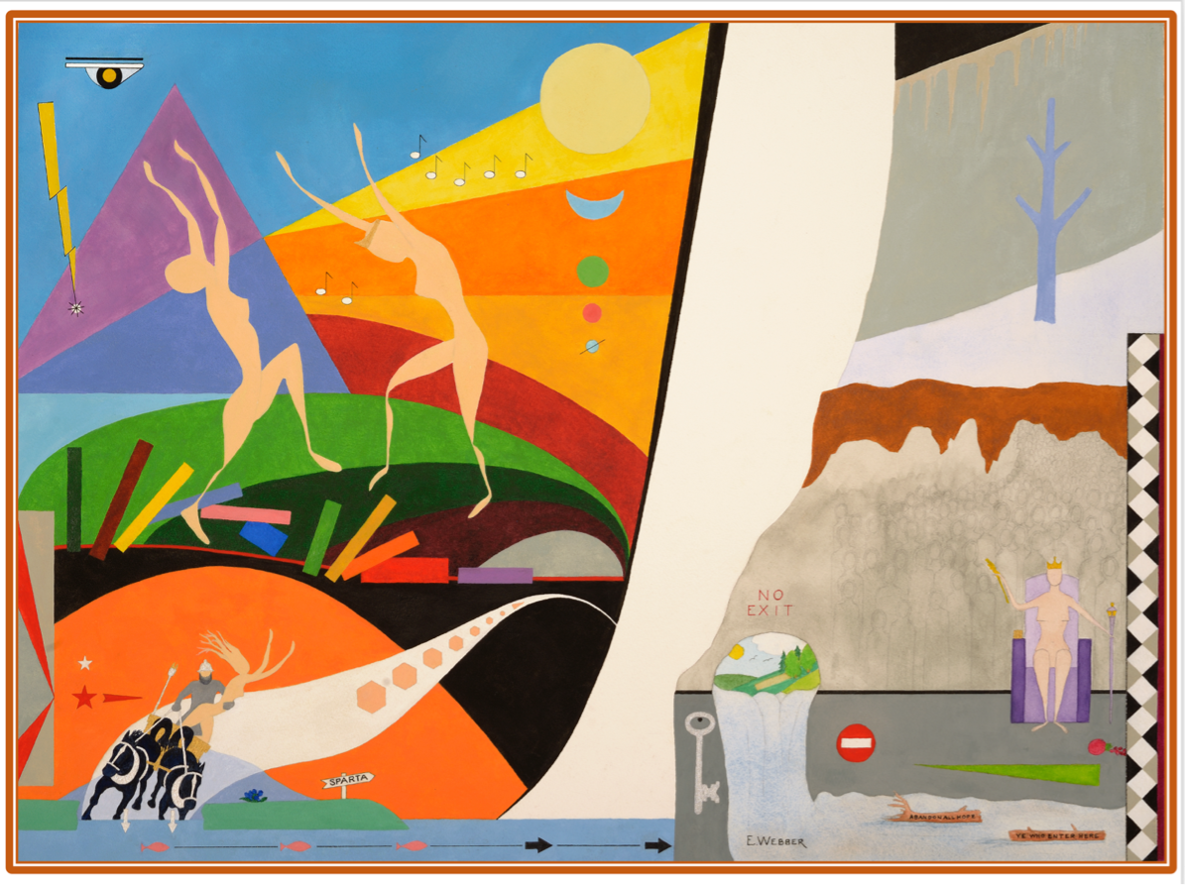
As described by the artist, Everett Webber, M.D. "Persephone was known as the Vegetation Goddess and the Queen of the Underworld. I decided to cover the entire story in this painting, rather than a single moment in time. I would use abstraction, realism, detail, symbolism, and surrealism, with both bright and somber colors, to develop the story, which starts with the abduction of Persephone in the lower left quadrant of the painting. Hades has burst through the Earth of Sicily in front of Mount Etna and swooped down to Persephone, who was picking the blue narcissus. He has his scepter, dark clothing and helmet of invisibility and is about to plunge back into his realm, the Underworld, which is also called Hades. The entrance is through a cave below Sparta. The River Styx forms the border between Earth and the Underworld. It flows in through the mouth of the cave carrying detritus in the form of trees that bear the inscription ABANDON ALL HOPE YE WHO ENTER HERE. There is a red and white traffic sign that signifies ‘Do Not Enter.’ NO EXIT is written above the cave entrance.
In the lower right quadrant, Persephone is seated on her royal purple throne with crown, scepter, sheaf of wheat, and her little gold box. Before her on the floor is a pomegranate with seven seeds. Behind her are the figures of her subjects, the Shades.
Moving to the upper right quadrant, we find the ravages of winter upon the Earth. Snow, ice, black, gray, and blue are predominant. The landscape is barren.
Moving to the upper left quadrant, we find a happy scene. It is now spring/summer, and we find an abstracted Demeter (her mother) and Persephone, with her crown, dancing and singing. Zeus, the all-seeing eye, looks down and throws a thunderbolt from Mount Olympus. Musical notes might be saying, ‘What a beautiful morning, what a beautiful day.’ There is a panoply of shapes, contours, and geometric building blocks that have the happy colors of successful crops, vegetation, flowers, and animal life. There are celestial objects related to the harvests. Thus, the origins of the seasons.”